Role
Senior Product Designer
Responsibilities
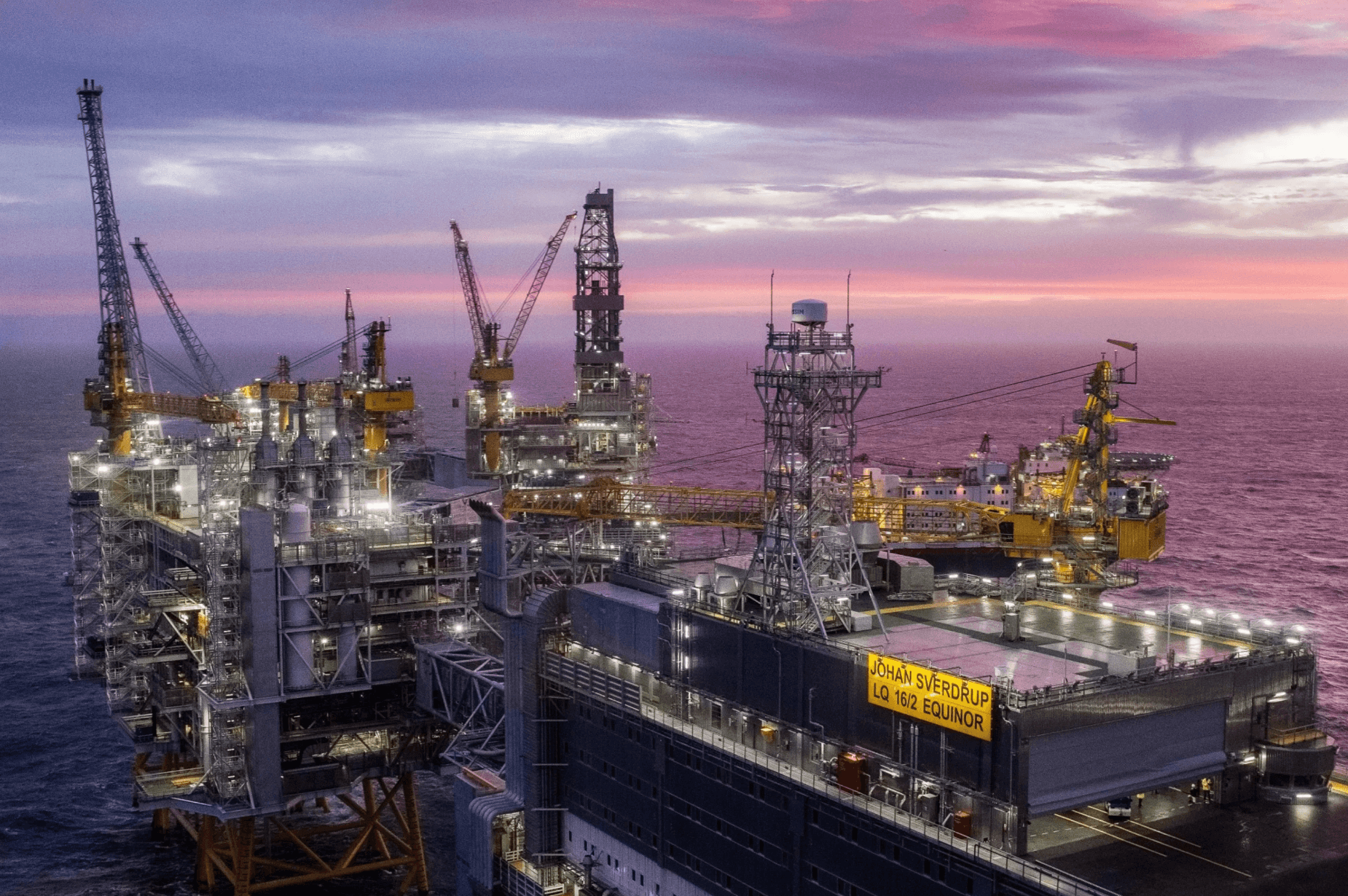
Modernising liquids operation for a global energy company
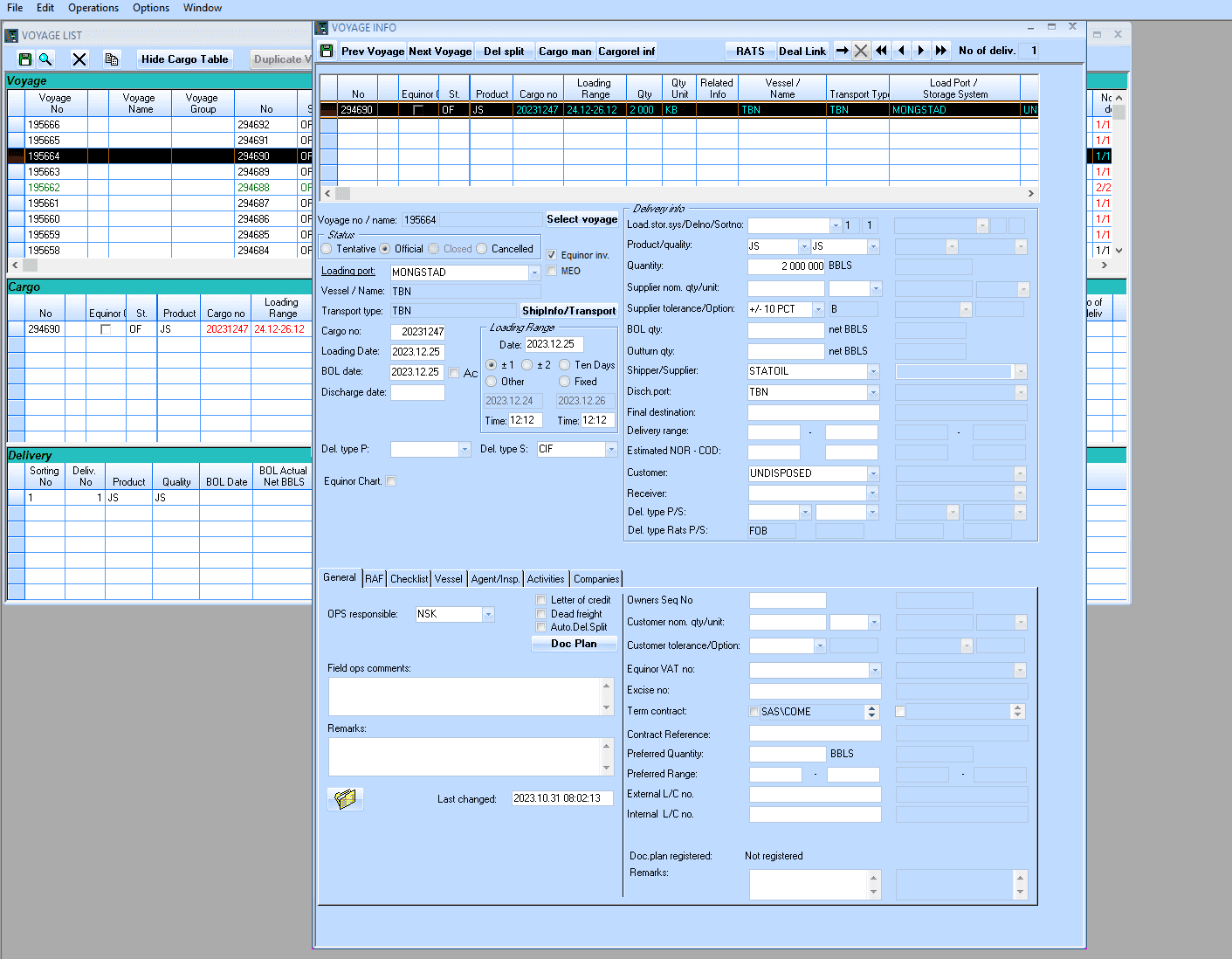
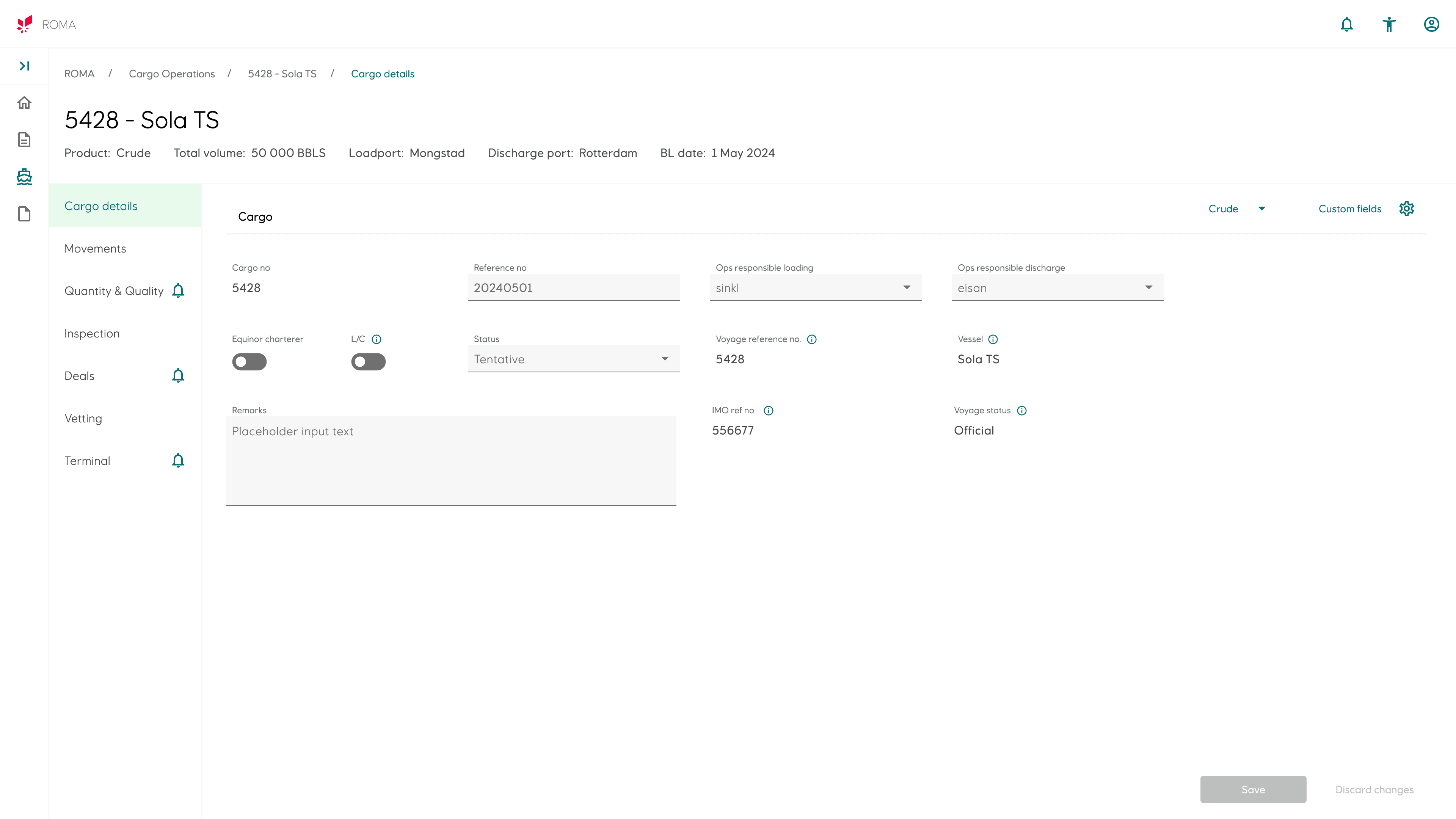
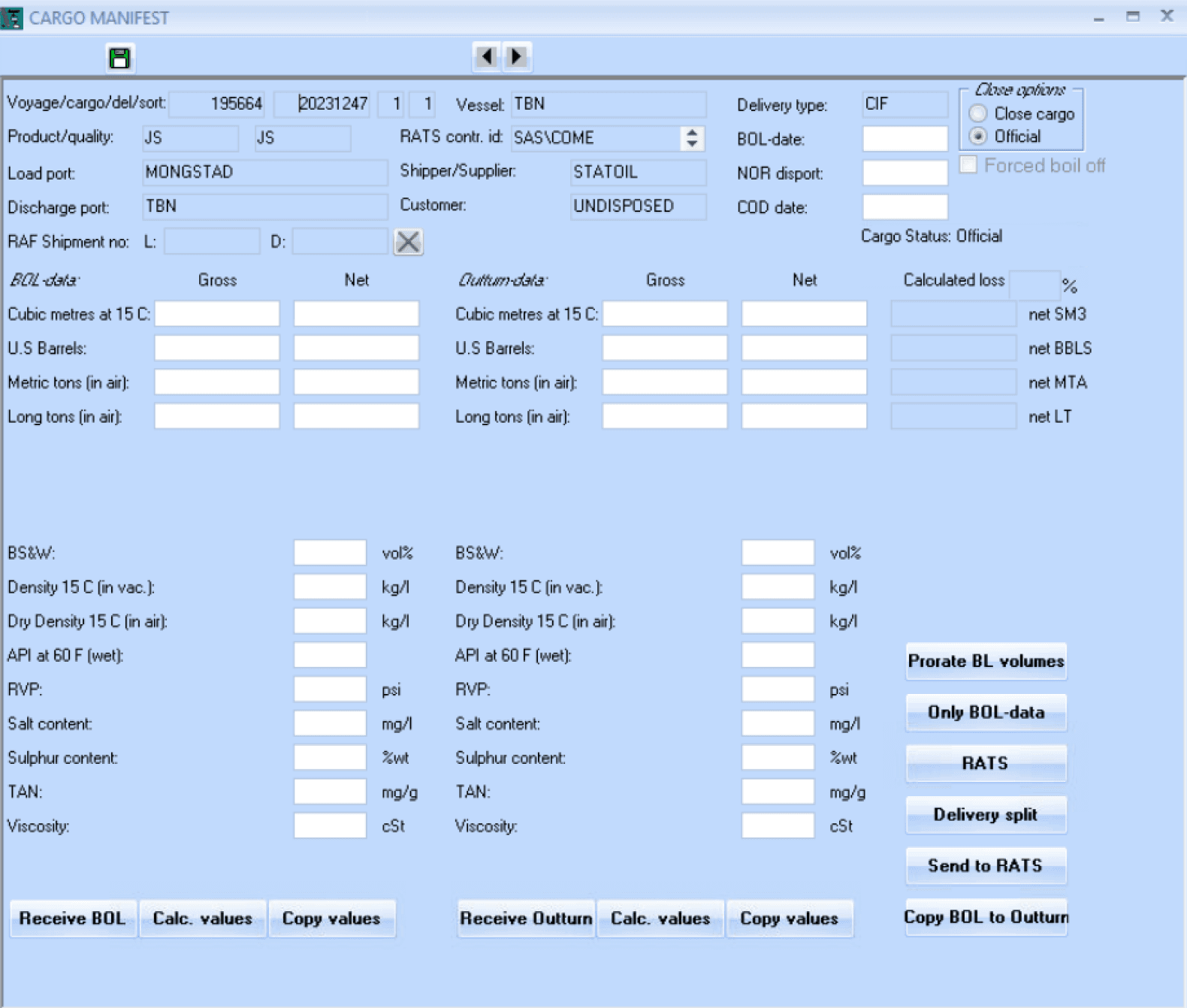
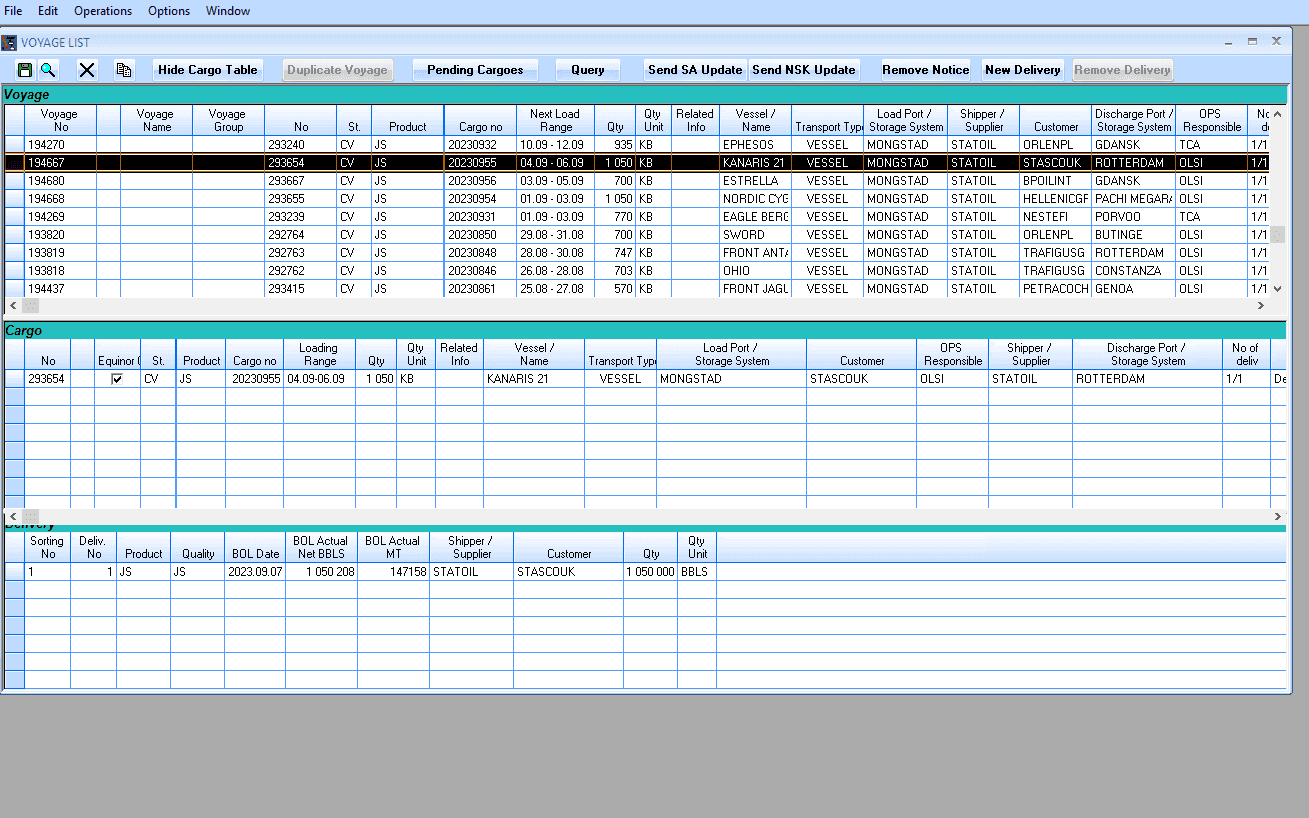
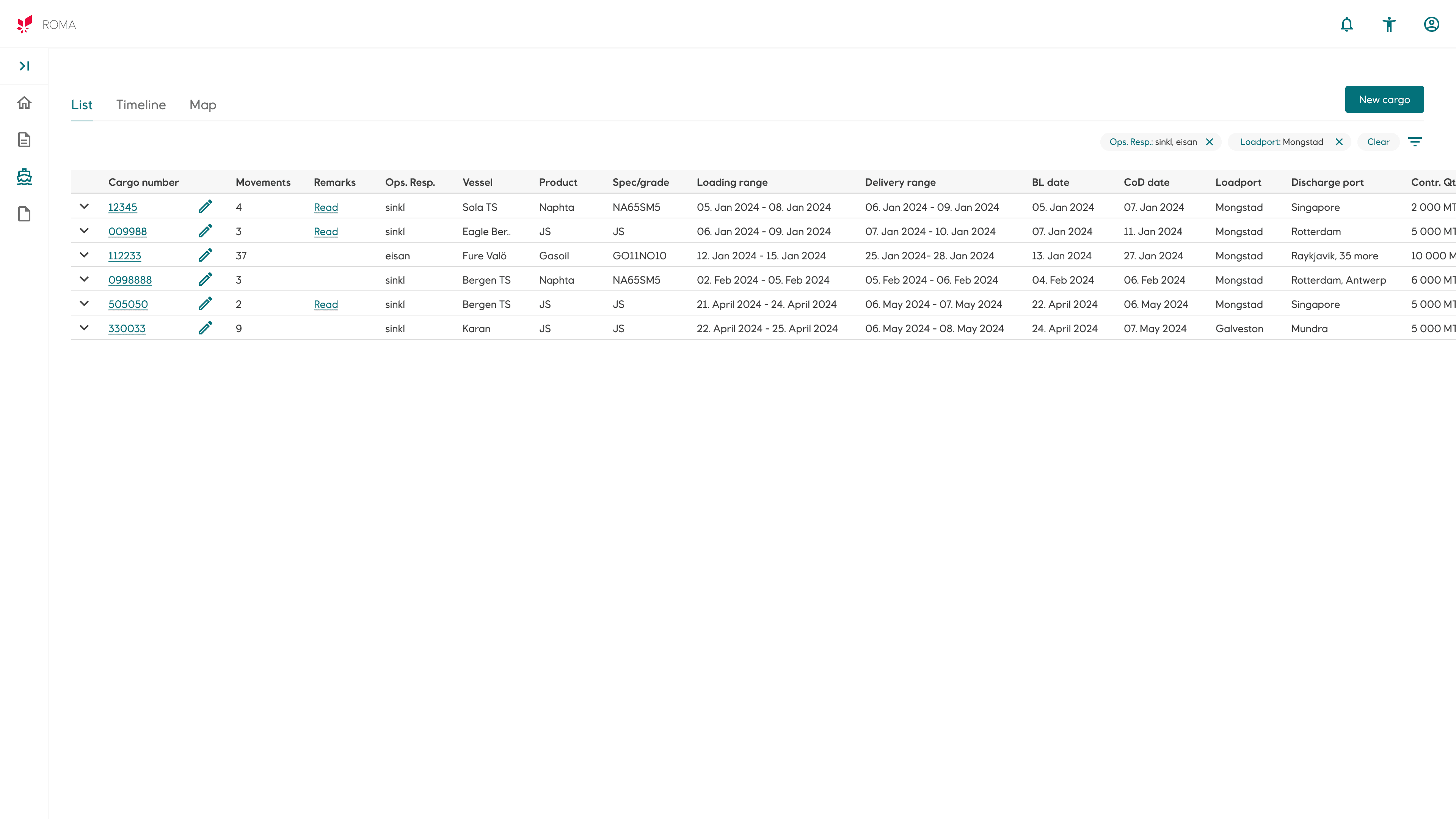
I led Discover & Define for the end-to-end ecosystem and the Design of a cargo operations hub within a new centralized platform for Equinor's liquids trading — turning fragmented 90s-era systems into a modern, role-based workspace.
The Problem
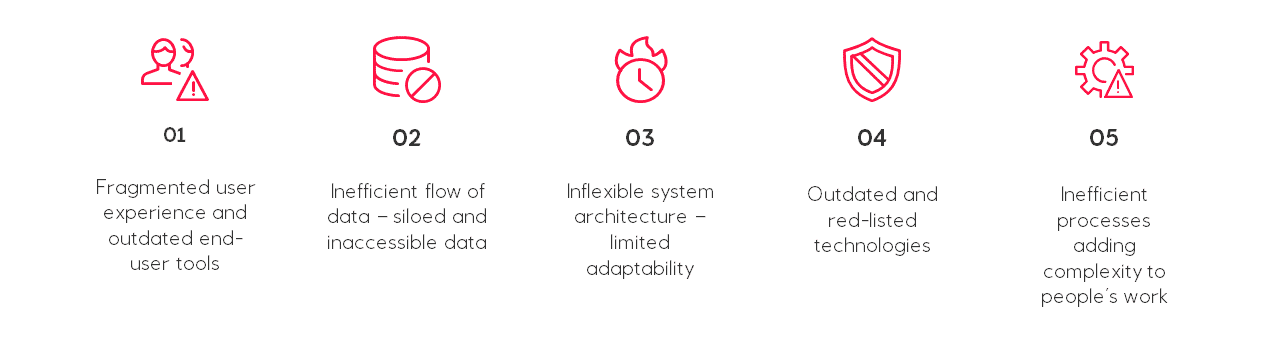
Leadership and employees had different ideas about what needed to change.
There was no shared vision — development had started before anyone agreed on what to build. And the domain itself was genuinely complex: dozens of roles, each with distinct workflows, all interdependent.
Tools from the 1990s.
Two failed modernisation attempts.
Billions in annual revenue at risk.
Discover
14 weeks
Understand, learn and map the current state through immersive research and exploration.
Define
4 weeks
Looking forward, address needs and leverage findings to envision the future state and functional requirements for the product teams.
Design
>1 year
Move to the tangible; concretise wireframes and define interaction principles, MVP.
Deliver
~4 years
Start building the product and service. Set up team for continuous releases and development.
Discover
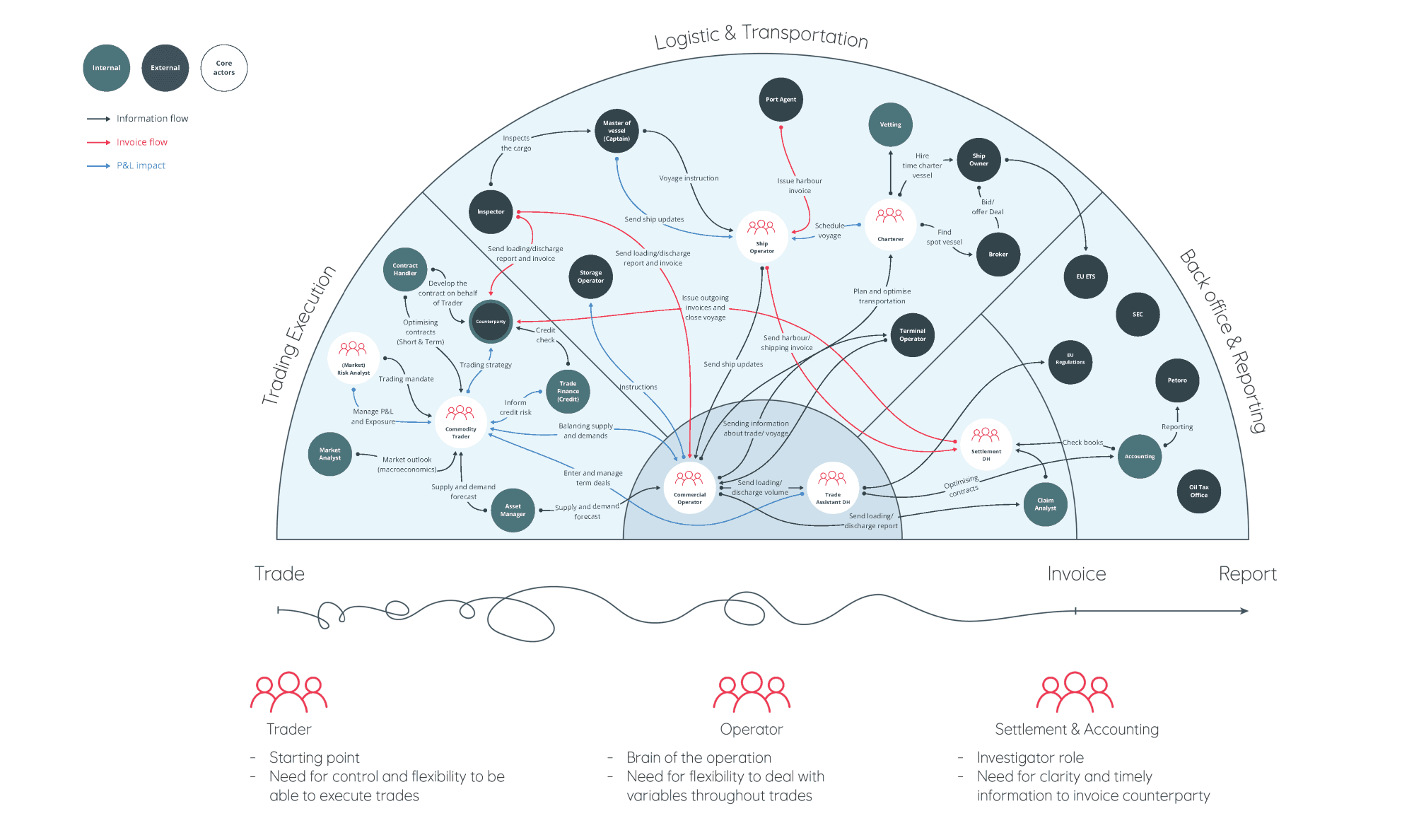
I started by mapping the full picture (Boulder -> Rocks -> Pebbles). Through workshops, I built an ecosystem map of every role in the liquids value chain.
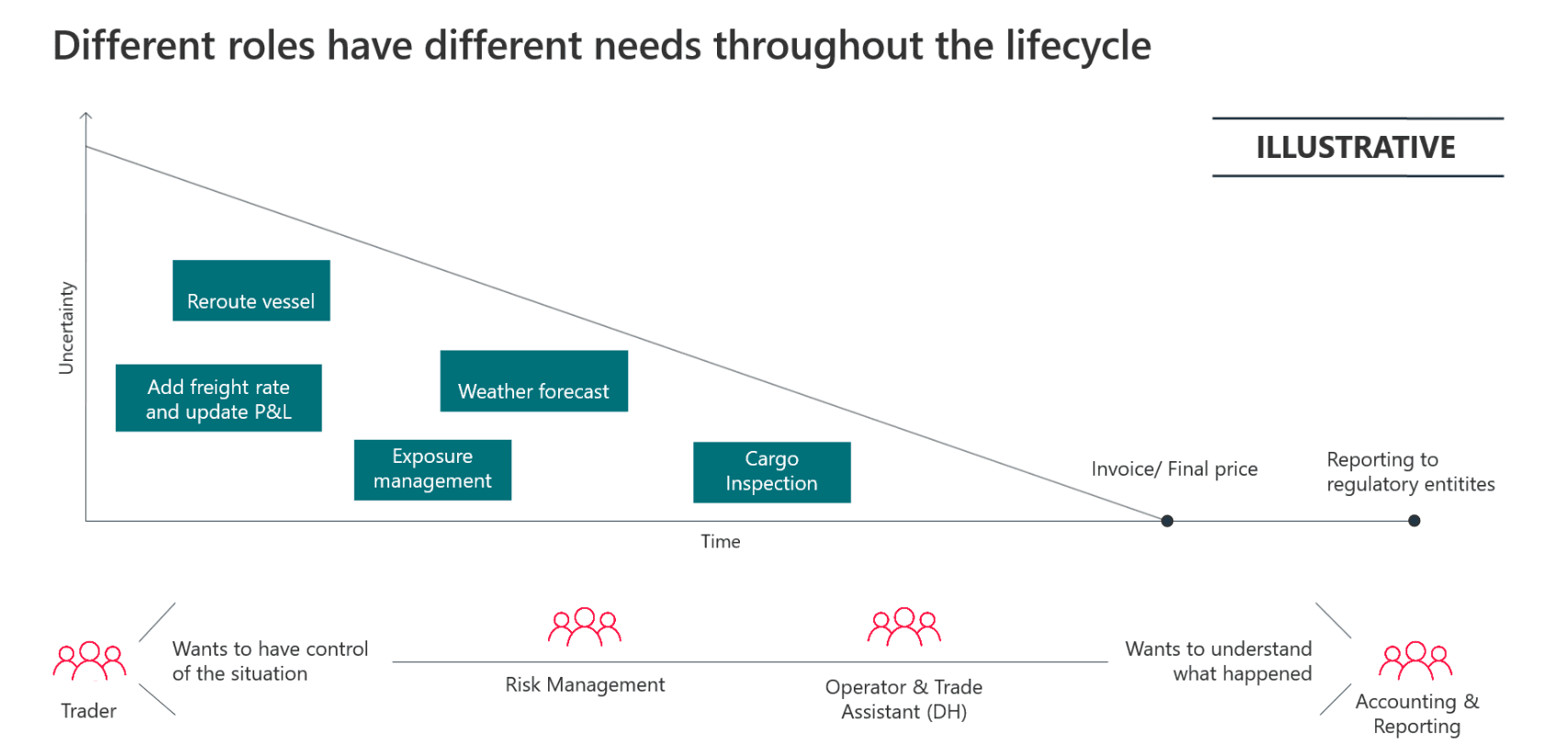
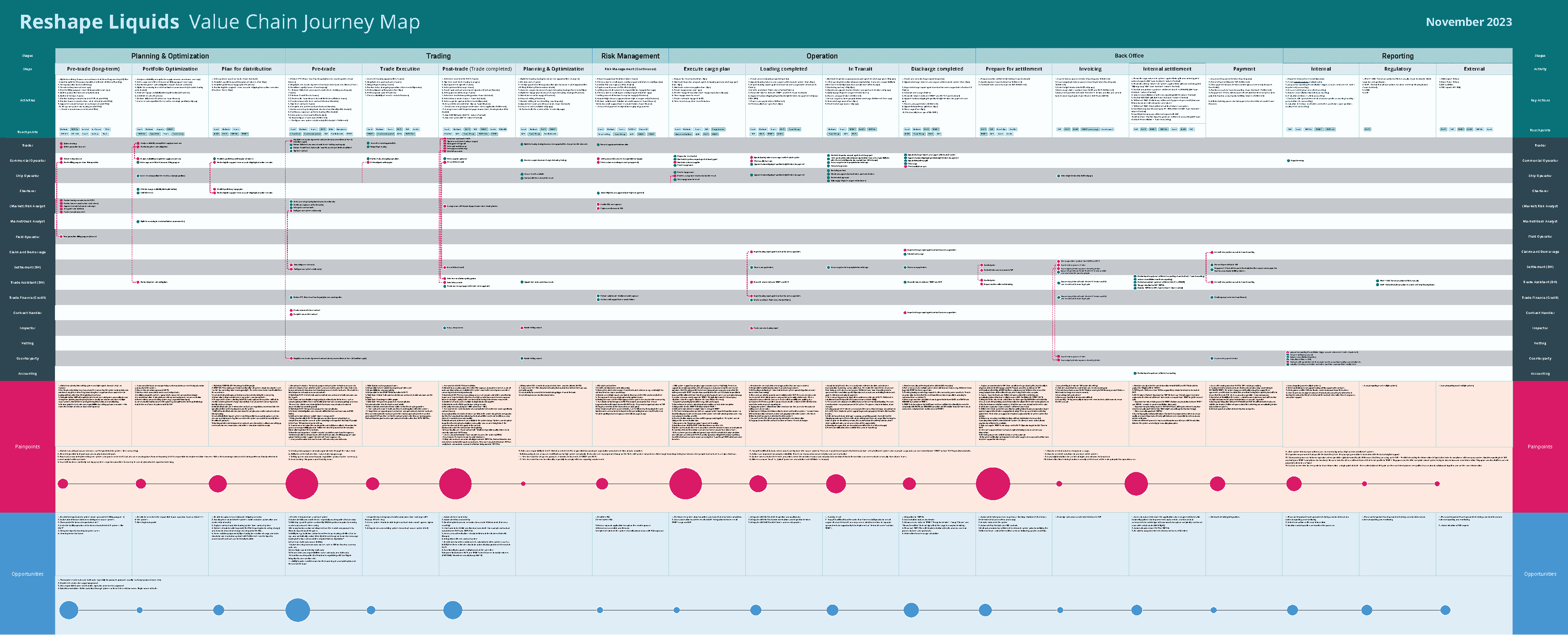
From there I drilled into AS-IS journey maps for each key role. These maps became the single most important artefact of the project — they were used as facilitation tools during interviews, as alignment documents with leadership, and as the foundation for everything that followed.
Research Artefacts: Ecosystem map, AS-IS journey maps, Discovery report with key findings.
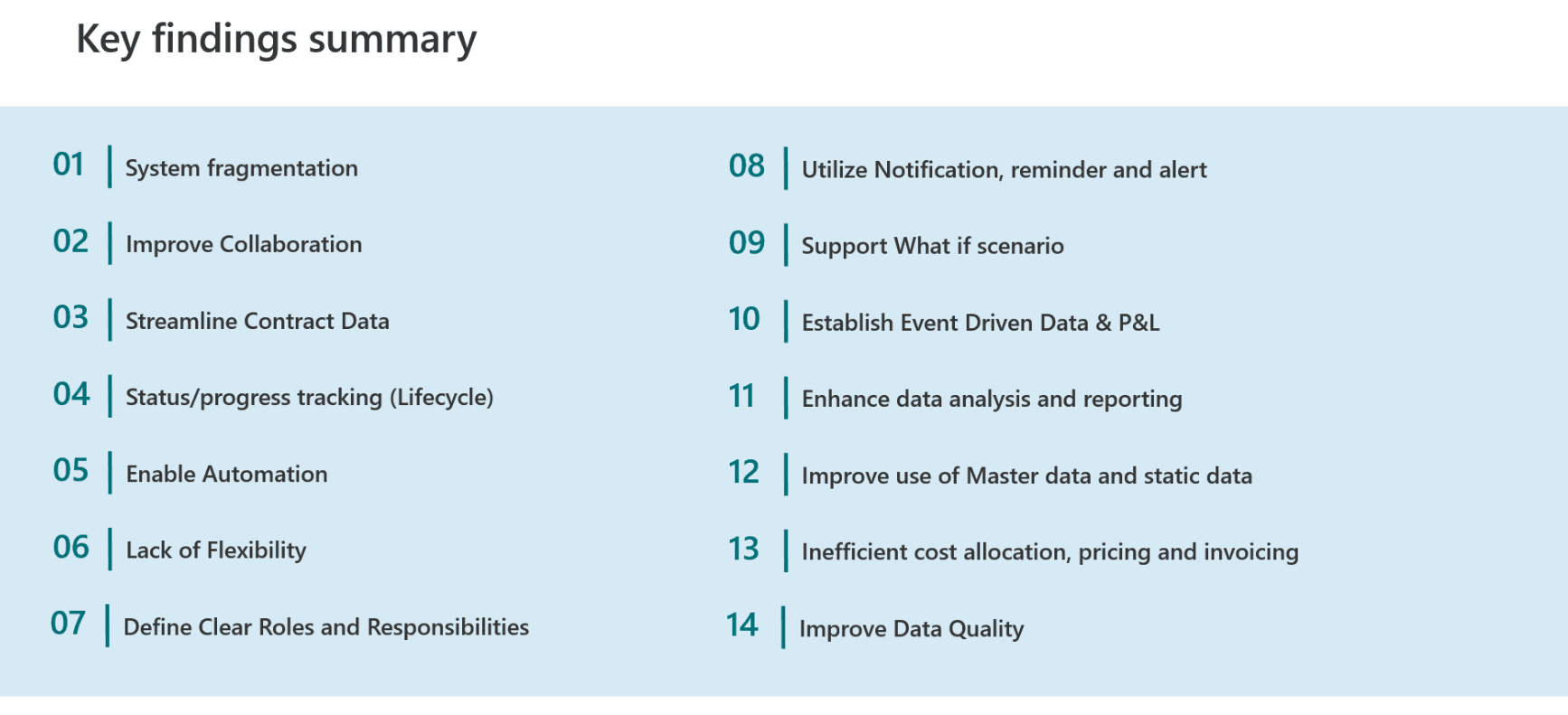
Key Findings
Each KF encompass both pain points and opportunities that share similar root cause across the Value Chain Journey Map.
These findings will guide decision-making and inform subsequent steps in the design thinking process (Define phase), which aim toward the future state.
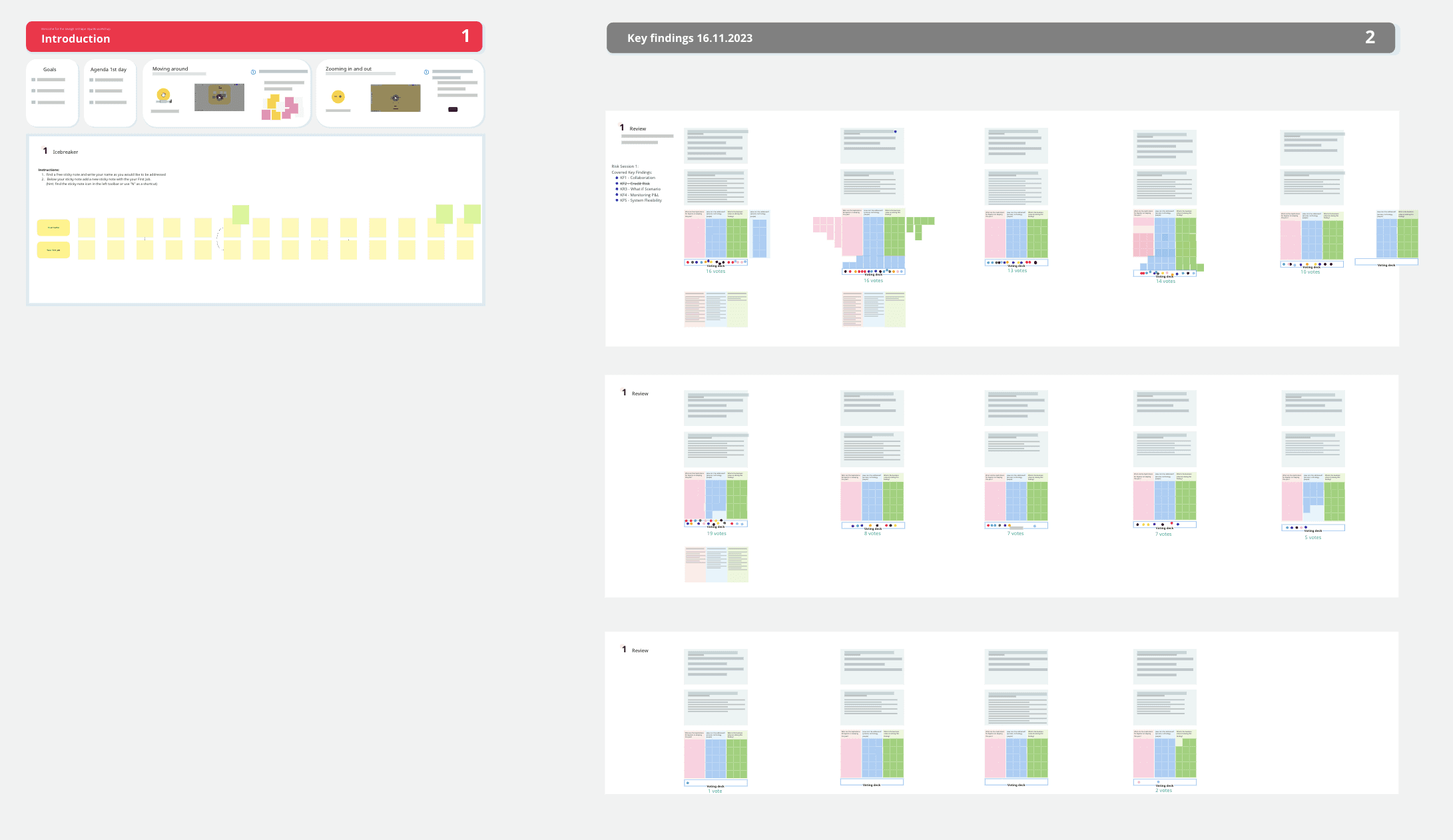
Entering the Define phase, to-be initiation event
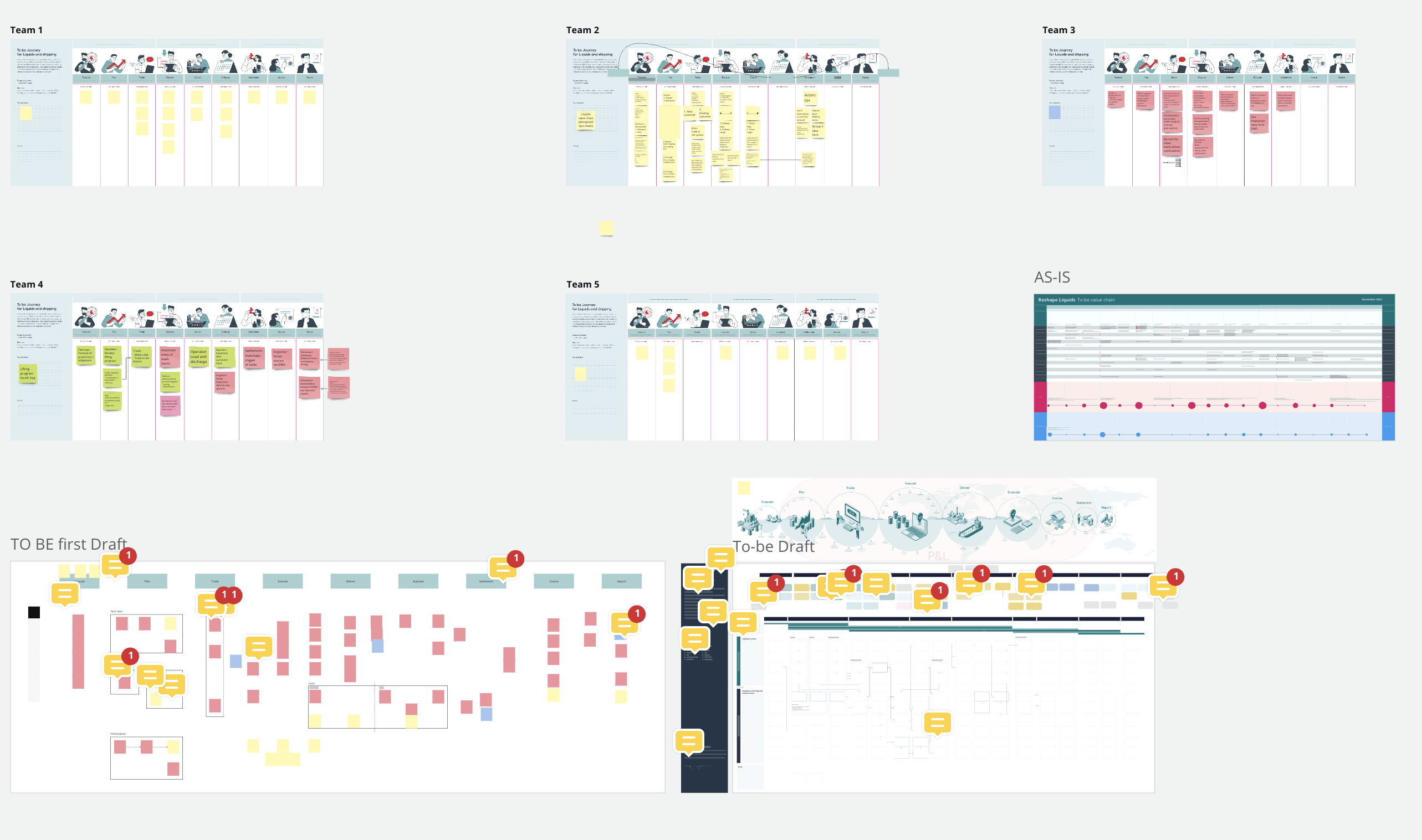
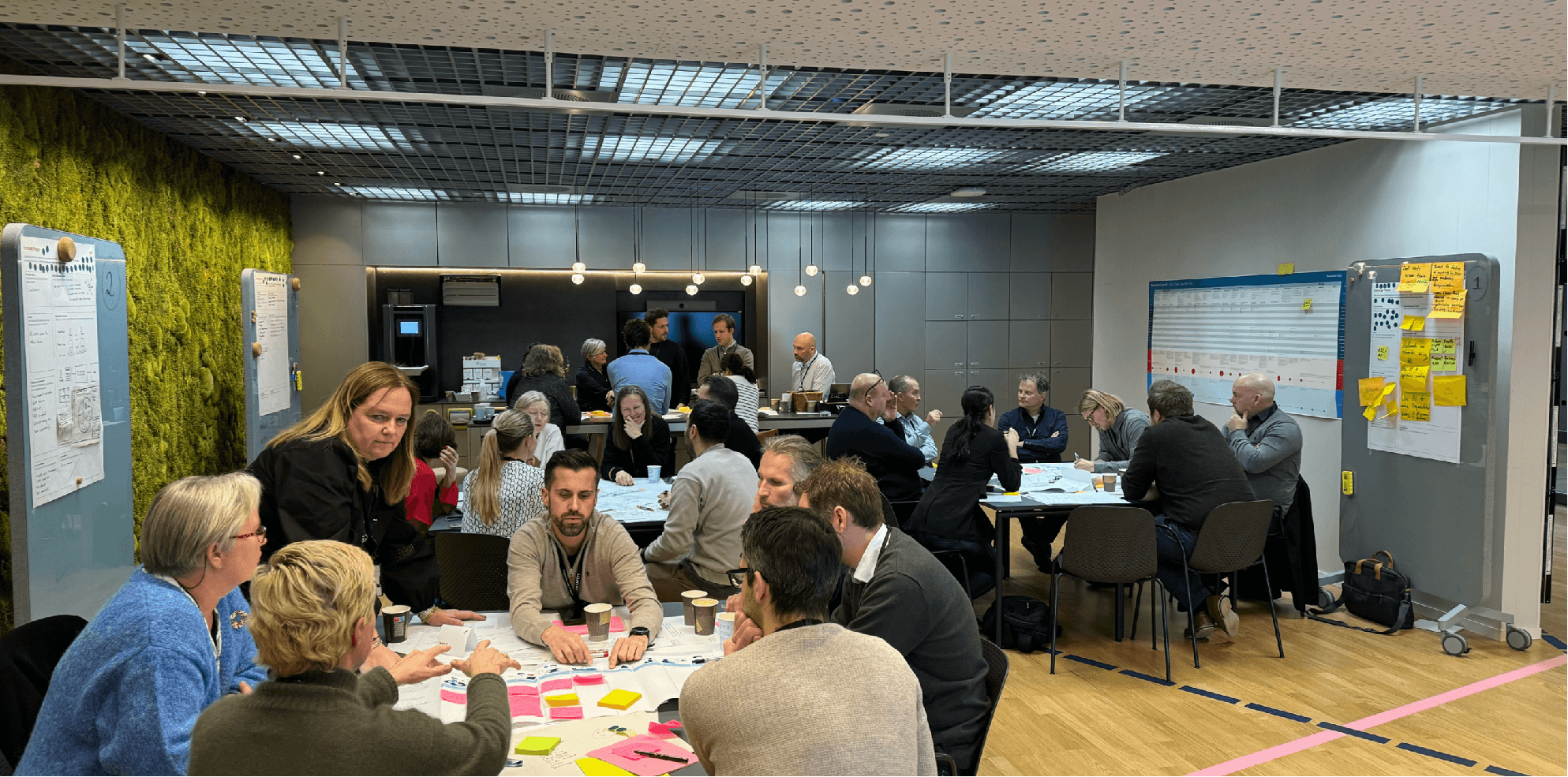
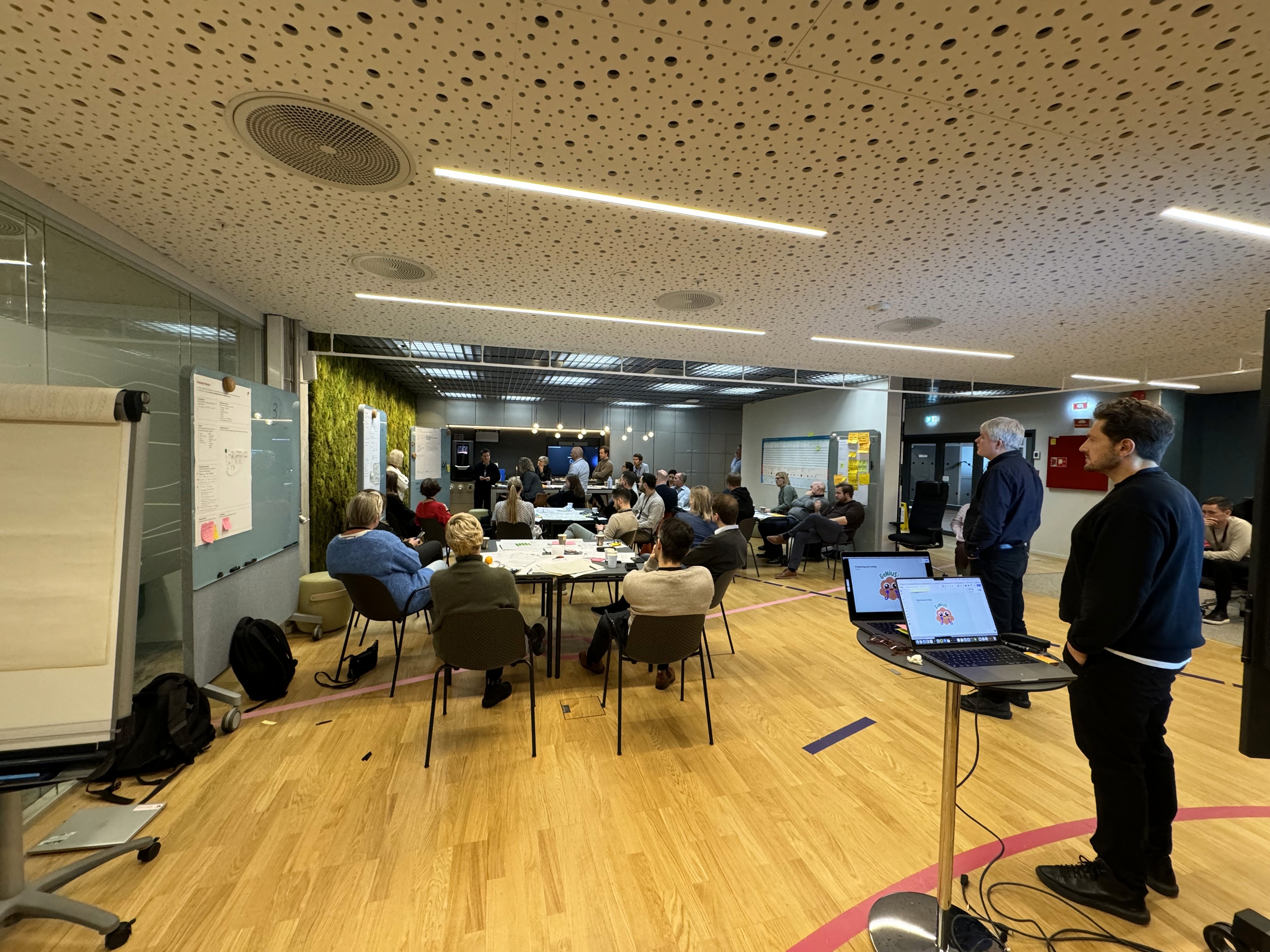
Building on the findings, a 45-participant workshop used round-robin and brand-swap activities to collaboratively design the 'To-be' map for Liquids & Shipping. During the workshop, the team facilitated multiple tables and avoided the App and AI trap.
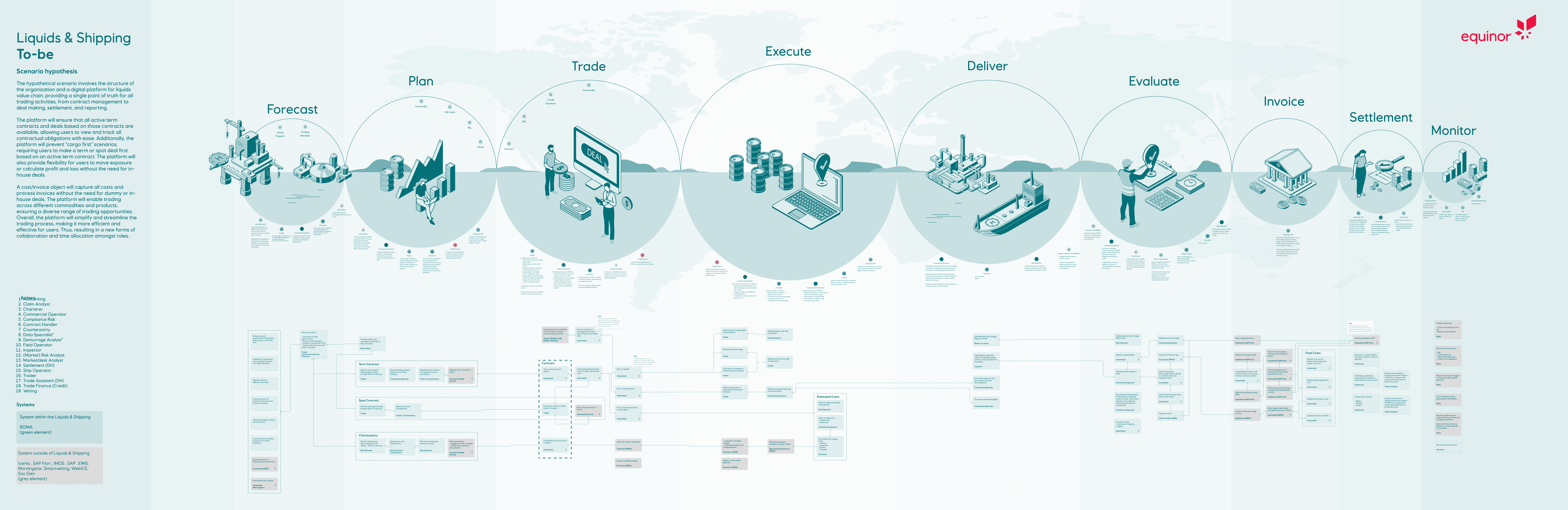
Deliverables: Service blueprint/northstar vision, design principles, functional requirements.
Northstar & Functional Requirements
The findings fed into a service blueprint describing how the future platform should work.
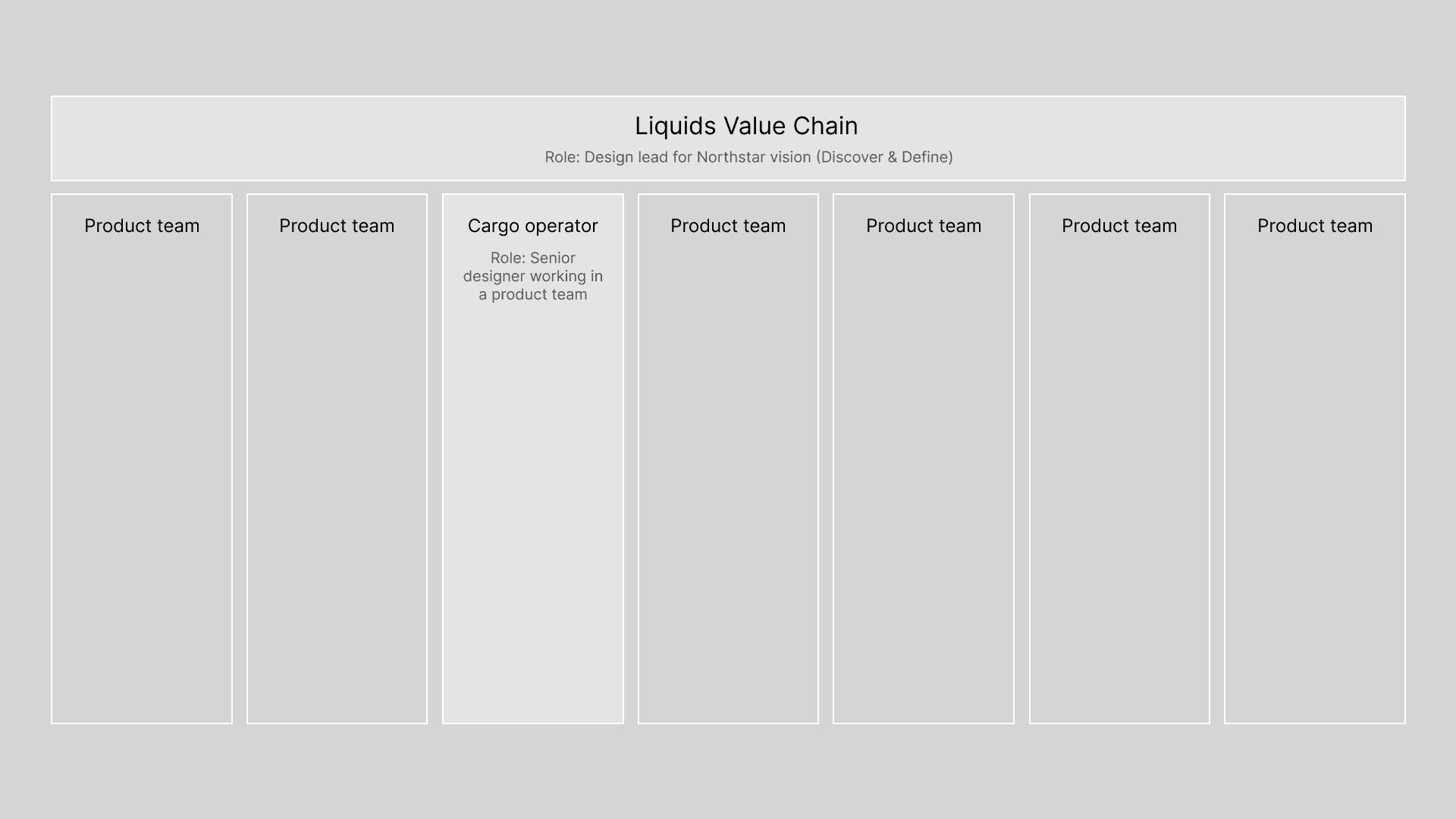
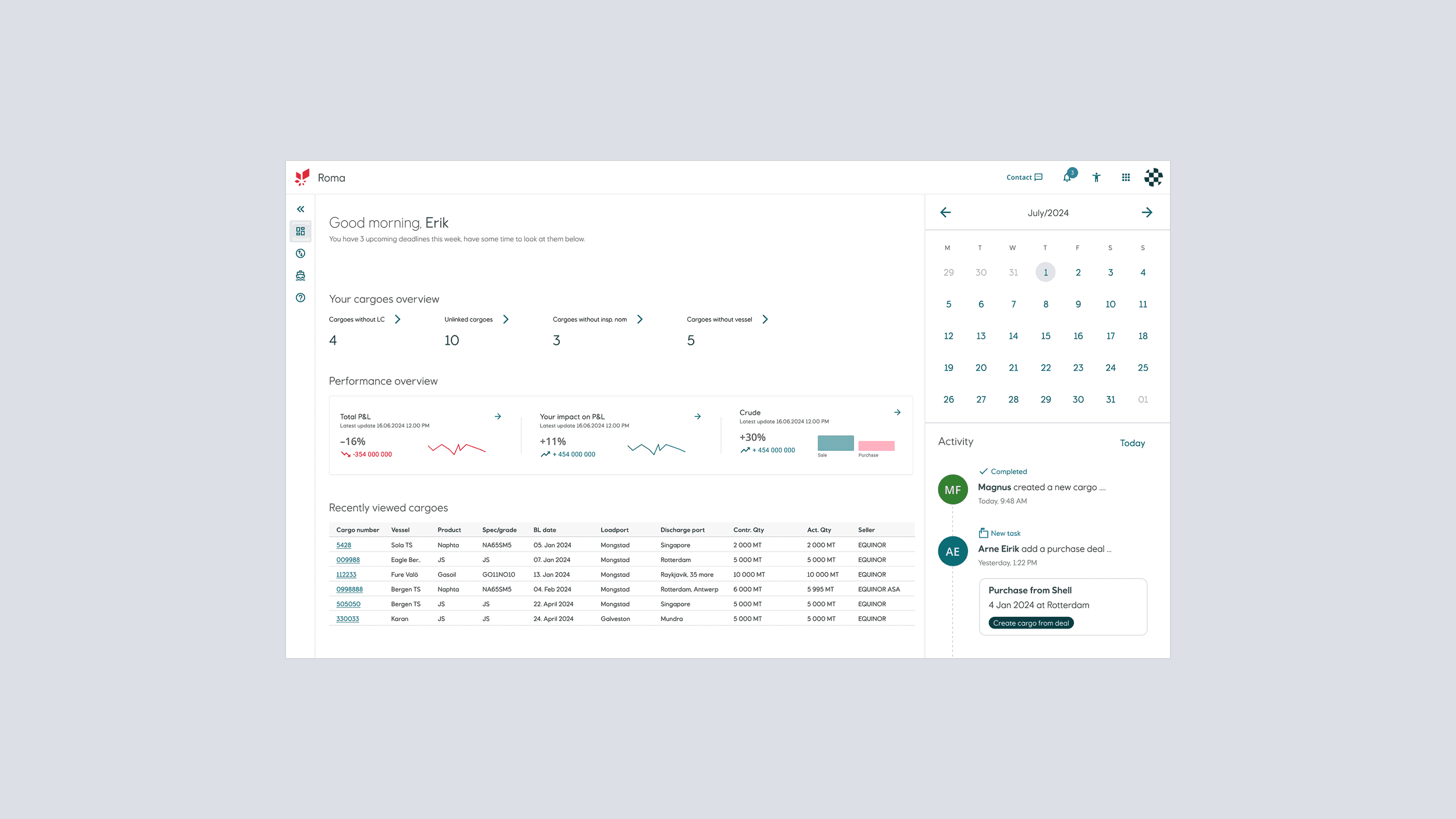
The core idea: a single centralised hub where every mapped role — trader, cargo ops, risk, back office — works from one platform. Each role gets a customisable dashboard tailored to their login credentials and responsibilities.
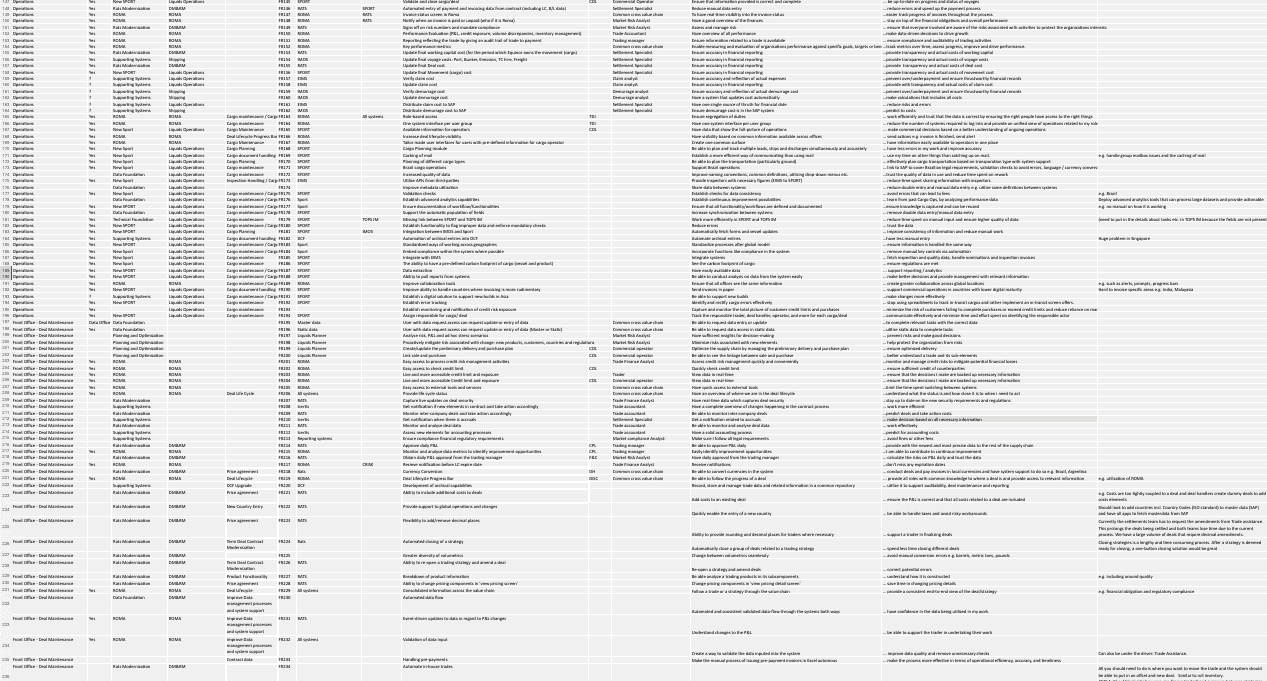
Functional Requirements & Product Teams: User stories describing the solution so that the product teams can work towards a tangible solution.
Design & Deliver
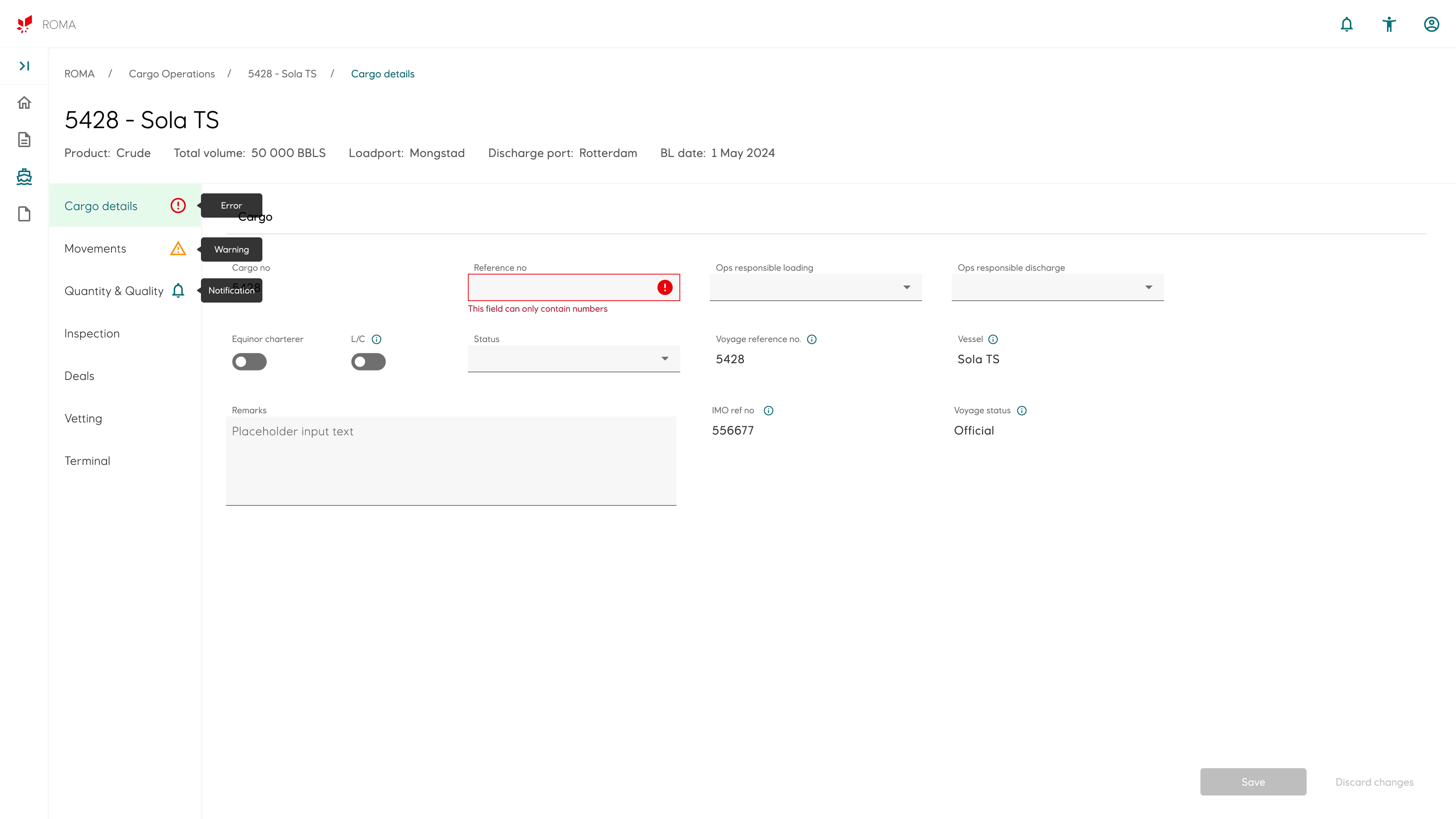
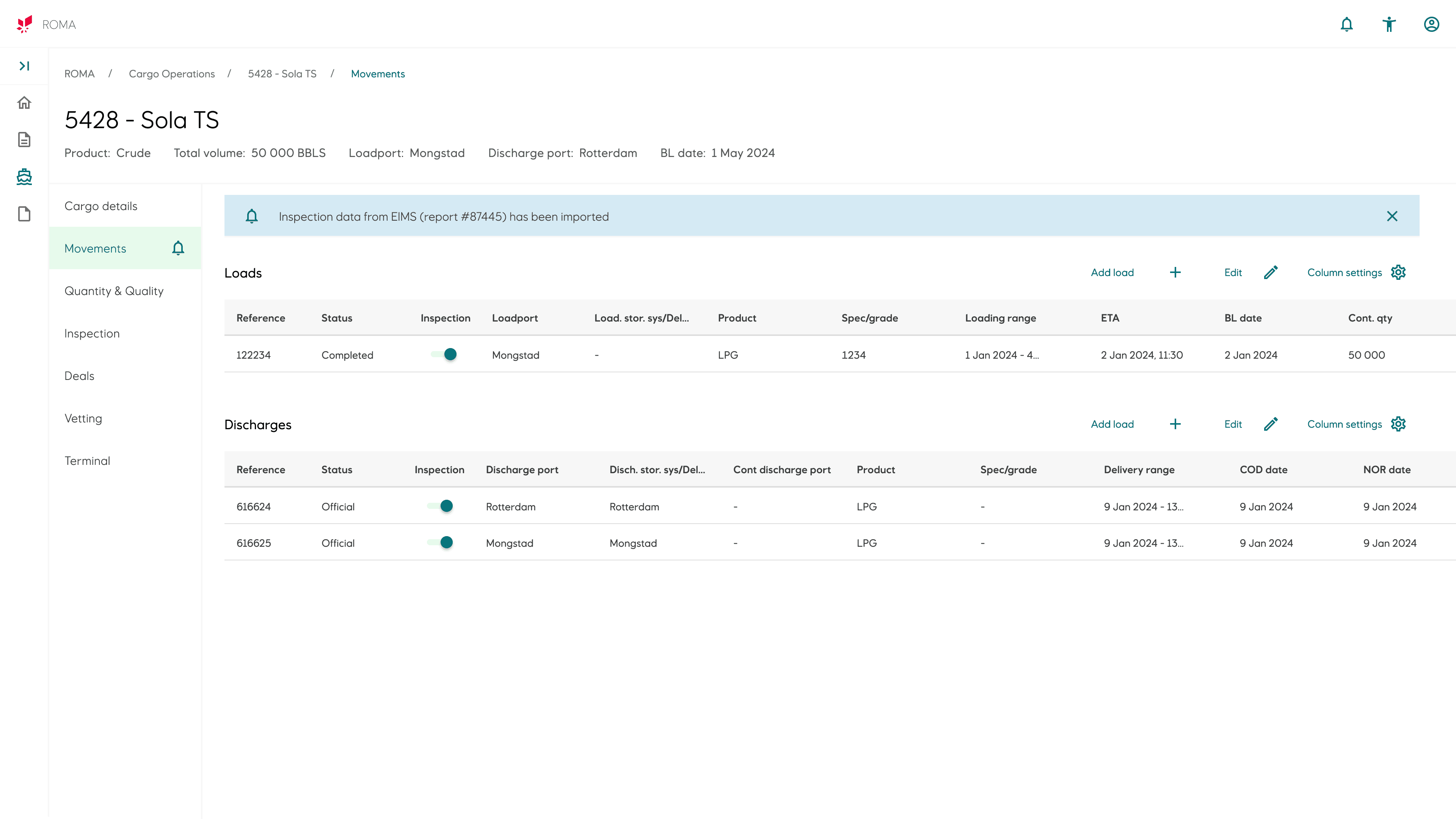
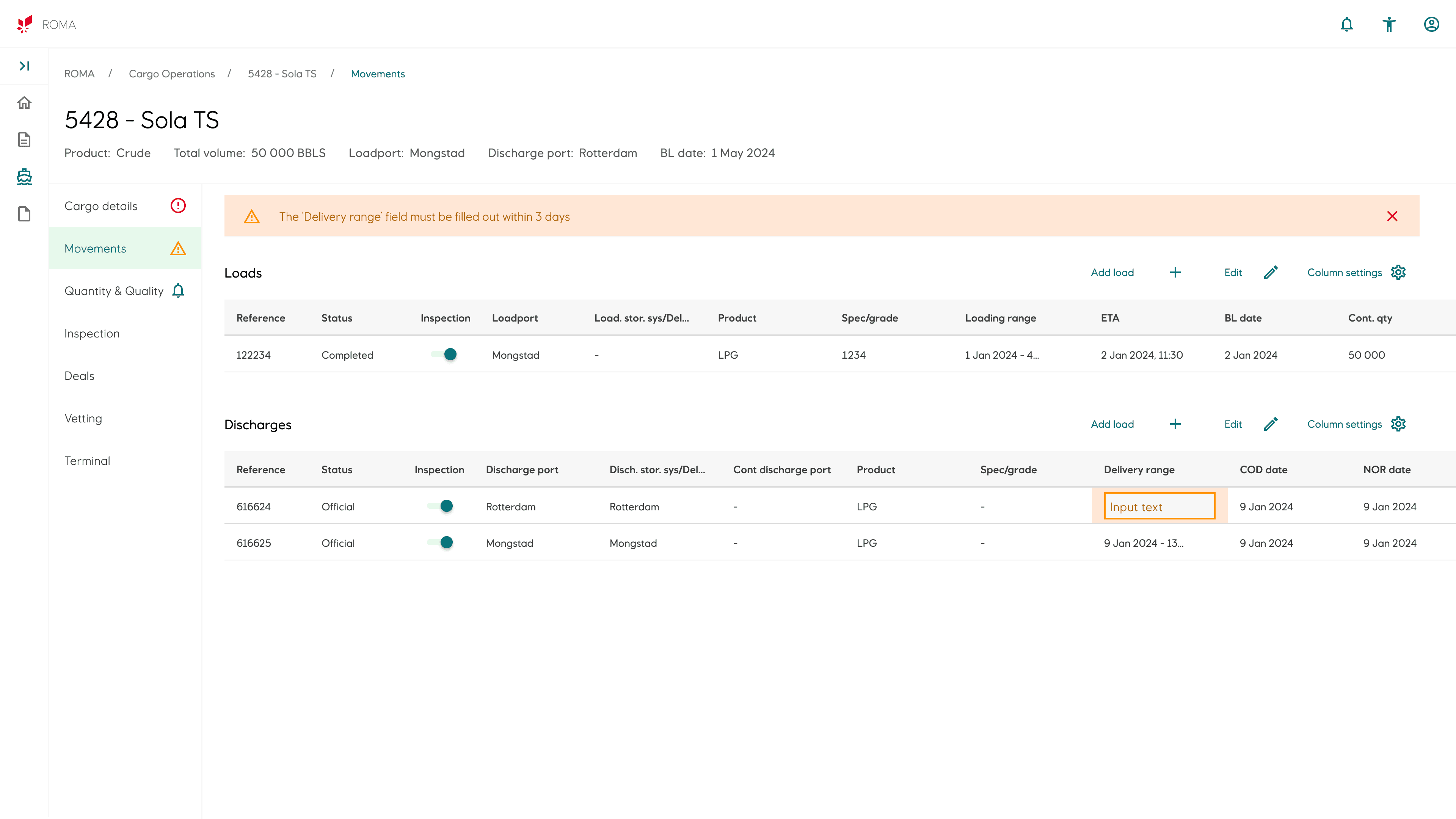
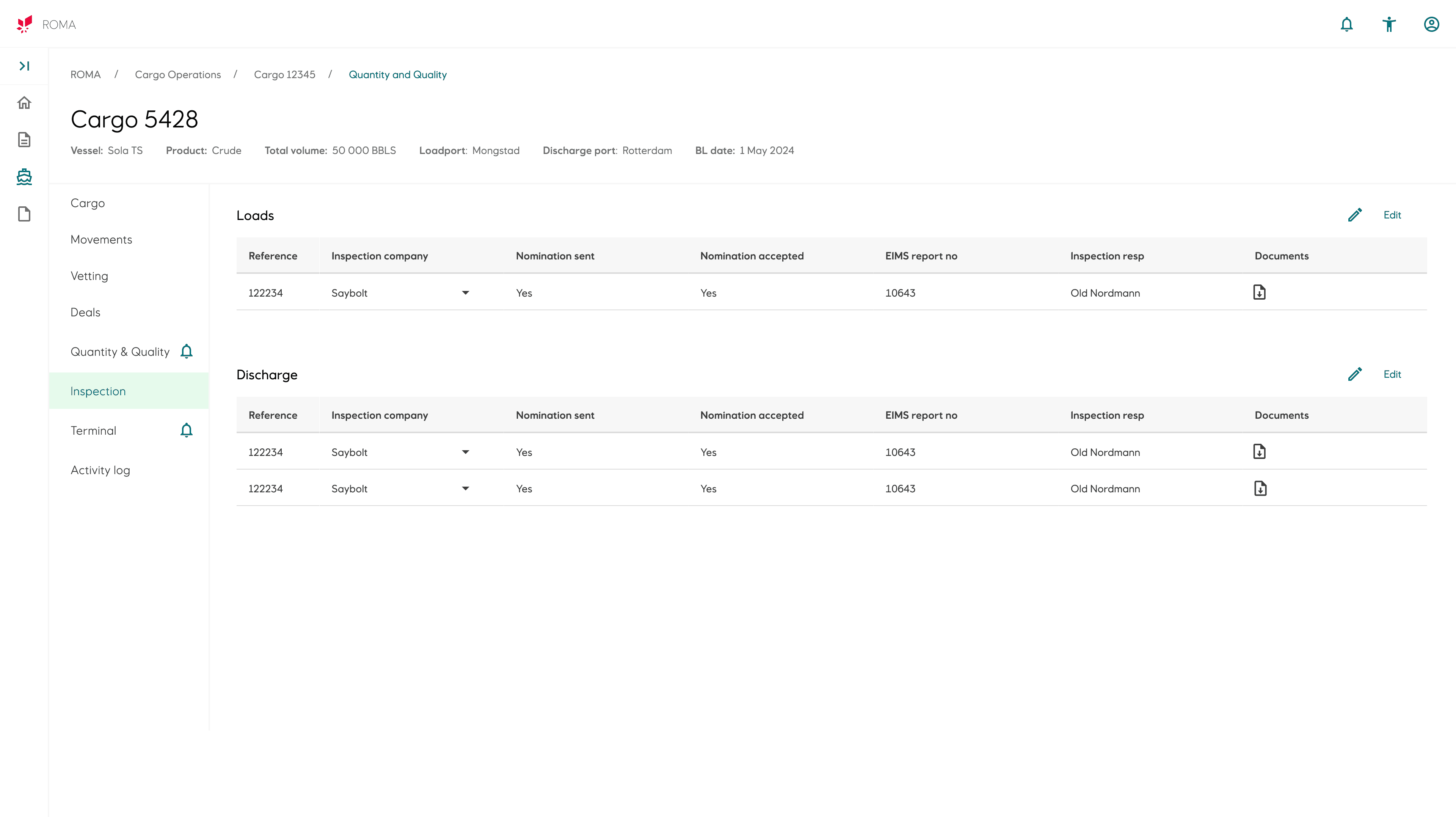
The service blueprint translated into user stories, which were divided across multiple product teams — one per role area. I led the Cargo Operations stream.
I ran weekly user syncs to test solutions and gather feedback, refining designs iteratively while following Equinor's design system to ensure consistency across all product teams.
"I have been waiting for an overview like this since I joined" - Cargo operator with 10 years of experience, referring to the table/map/timeline overviews.